Blog / Comparison

Best Luxury SUVs With 3rd Row Seating

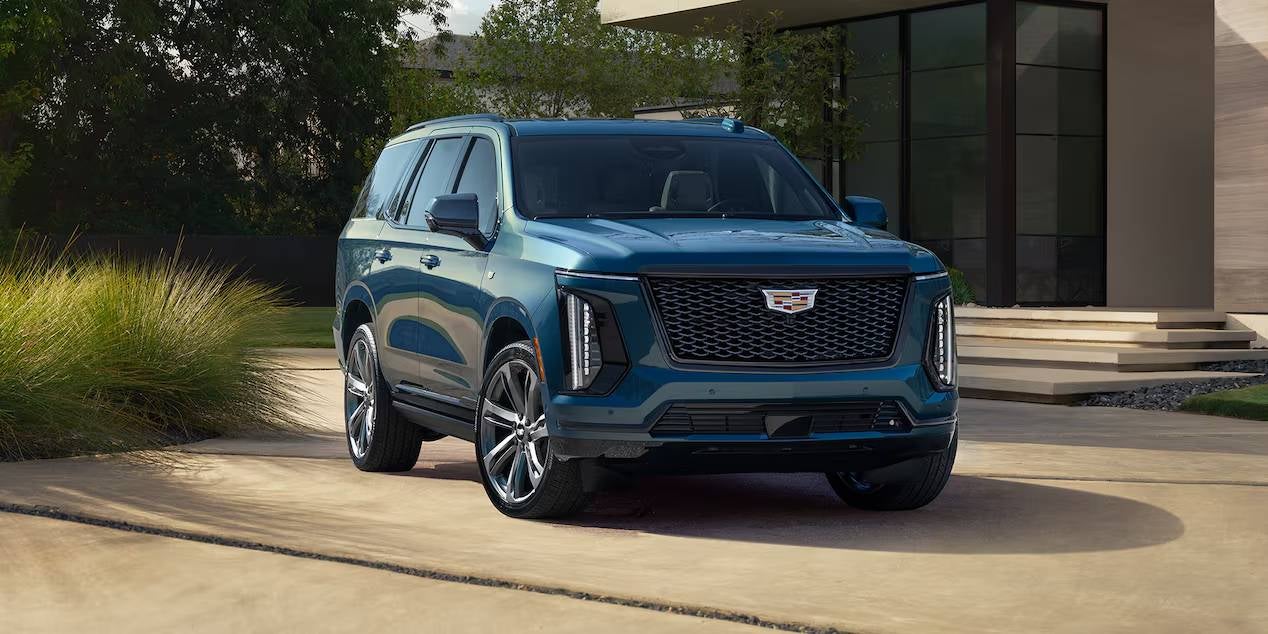
cadillac escalade luxury suv with 3rd row seating

A third row only earns its keep if your family actually uses it week after week, without a fight over legroom or a wrestling match to fold it flat for a Costco run. This guide helps Gulf Coast families sort through the best luxury SUVs with 3rd row seating available for 2026, with a close look at how the Cadillac Escalade, Escalade ESV, Escalade IQ, Escalade IQL, and VISTIQ stack up against the rest of the segment. If you want to see any of these in person, you can browse new inventory at Turan-Foley Cadillac anytime.

Why Third-Row Usefulness Matters More Than Just Seating Count

A brochure can promise seating for seven or eight, but that number only matters if the third row is somewhere your family will willingly climb into. Usefulness comes down to how easily someone gets back there, how much legroom they have once seated, and what happens to cargo space when those seats are filled. A luxury SUV with 3rd row seating needs to work for a weekend trip to Biloxi with grandparents in tow, not just look impressive in the driveway.

What Makes a Third Row Truly Family-Friendly

Judging a 3-row SUV comparison fairly means looking past the spec sheet's first line. Access and capacity matter, but so does cargo flexibility once those seats fill up, along with the tech and comfort features that keep everyone happy on the long haul.

Seating Capacity and Real-World Access

Third-row legroom across the luxury three-row segment can run under 30 inches on some midsize models or stretch to 36.7 inches on the Escalade ESV and Escalade IQL, a gap wide enough to separate "fine for a short trip" from "comfortable for adults."

Seating capacity varies too, landing anywhere between six and eight depending on whether the second row uses a bench or captain's chairs. Families with car seats should pay close attention to LATCH anchor placement and how much the second row slides forward to ease third-row entry.

Cargo Room Behind the Third Row

Even a spacious third row is a compromise if there's nowhere to put luggage once it's occupied. Cargo behind the third row often shrinks to single digits in cubic feet on midsize models. A flat load floor and split-folding seats make a bigger practical difference than most buyers expect, particularly for families who pack for beach weekends or hurricane-season evacuations.

Family Tech and Comfort Features

The best luxury SUVs with 3rd row seating extend comfort to every row, not just the front two. Rear climate zones, USB-C charging, and simple, durable controls matter more day to day than flashy screens. Safety tech such as automatic emergency braking and surround camera systems also plays into which SUV feels right for a family constantly shuttling kids, gear, and the occasional carpool.

Cadillac Escalade and Escalade ESV: The Full-Size Benchmark

The Cadillac Escalade and the longer Escalade ESV are the vehicles families measure everything else against when they need serious capability alongside genuine three-row comfort. Both use a 6.2L V8 producing 420 hp and 460 lb-ft, rated to tow up to 8,100 lbs on the standard-length Escalade and 8,000 lbs on the ESV. That towing figure alone puts these vehicles in a different category from most rivals, especially for Gulf Coast families who haul boats to the water on weekends.

Cargo space tells the bigger story about third-row usefulness. The Escalade offers 120.5 cu ft behind the first row, 72.9 cu ft behind the second, and 25.5 cu ft behind the third. The ESV, at 15 inches longer overall (226.9 inches versus the Escalade's 211.9 inches), stretches that to 142.2, 94.1, and 41.5 cu ft respectively, a jump of 16 cu ft behind the third row alone. The ESV also adds 1.8 inches of third-row legroom, bringing it to 36.7 inches, among the roomiest in the segment. Both models seat up to eight passengers thanks to a power 60/40 split third-row bench.

Shared technology across both models includes a 55-inch panoramic display, AKG Studio 21-speaker audio, wireless Apple CarPlay and Android Auto, Super Cruise hands-free driving, an AR video display, HD surround vision, and Magnetic Ride Control, along with three years of OnStar One. For families cross-shopping the full-size luxury SUV segment, the Escalade and ESV combine capability and comfort in a way few rivals match.

Cadillac Escalade IQ and IQL: Electric Flagship Power

The Cadillac Escalade IQ and IQL carry that same flagship presence into an all-electric package, built on a shared 205 kWh, 24-module battery. Cadillac estimates the IQ at 465 miles of range, while the IQL is rated up to 460 miles, well ahead of range anxiety concerns for most family use cases.

Performance comes from an Ultium dual-motor AWD setup that produces up to 750 hp and 785 lb-ft of torque in Velocity Max trim, enough for a 0-60 mph run under five seconds in a vehicle built to carry seven passengers and their gear. The IQL's extra length pays off in the third row, where legroom grows from 32.3 inches in the IQ to 36.7 inches in the IQL, with headroom improving by 0.9 inches. Full IQL legroom by row measures 45.2, 41.4, and 36.7 inches, front to back. Cargo behind the third row comes in at 23.6 cu ft on the IQ and 24.2 cu ft on the IQL, with the IQL also offering 75.4 cu ft behind the second row.

The IQL comes standard as a seven-passenger layout with second-row captain's chairs and a power-folding third row. Families who want to go further can add the Executive Second-Row Package, which includes dual 12.6-inch screens, two wireless charge pads, a rear command center, 42-speaker AKG Studio Reference audio, massaging heated and ventilated captain's chairs, tray tables, and headrest speakers. Additional technology includes 4-Wheel Steer with Arrival Mode, Air Ride Adaptive Suspension, and Magnetic Ride Control.

Cadillac VISTIQ: Electric Midsize Three-Row Versatility

The Cadillac VISTIQ fills a different role, offering electric performance in a midsize footprint that's easier to park and maneuver than its full-size siblings. Dual motors produce 615 hp and 650 lb-ft in Velocity Max, with a 0 to 60 time of 3.7 seconds and a 5,000 lb tow rating. It seats up to seven with a bench third row or six with captain's chairs, and that third row exceeds 30 inches of legroom, which Cadillac describes as genuinely adult-friendly rather than a kids-only afterthought.

Cargo capacity checks in at 80.2 cu ft maximum, 43 cu ft behind the second row, and 15.2 cu ft behind the third. Detailed cabin dimensions show headroom of 40.91, 38.98, and 39.56 inches across the three rows, legroom of 43.14, 40.16, and 30.63 inches, and shoulder room of 61.02, 59.69, and 54.33 inches. Families will also appreciate Intelligent ClimateSense five-zone climate control, second-row USB-C ports, and LATCH child-seat anchors throughout.

Compared to the two-row LYRIQ, the VISTIQ adds both a functional third row and meaningfully more cargo flexibility, making it a strong entry point into Cadillac's electric three-row lineup for buyers who want a spacious luxury SUV without full-size dimensions.

How Other Luxury Three-Row SUVs Compare

The luxury large SUV comparison field is crowded, and each competitor brings a different strength to the table.

Lincoln Navigator and Navigator L

The Lincoln Navigator seats up to eight with 172.1 cu ft of total passenger volume and 22.9 cu ft of cargo behind the third row. The longer Navigator L offers 121.6 cu ft behind the first row, 84.5 behind the second, and 37.4 behind the third. A twin-turbo 3.5L V6 produces 440 hp, paired with a 10-speed automatic and 4WD, and a two-part "Split Gate" tailgate adds everyday practicality.

Mercedes-Benz GLS and BMW X7

The Mercedes-Benz GLS offers an adult-usable third row with a 50/50 power-folding mechanism and 17.4 cu ft of cargo behind it, plus a five-zone climate system with ceiling-mounted controls. The BMW X7 seats seven in xDrive40i trim, or six with captain's chairs, though its third row suits children better than adults, with 12.8 cu ft behind it. The X7 offers a 3.0L I6 (375 hp) or 4.4L V8 (523 hp), both with mild-hybrid assist, plus towing up to 7,500 lbs.

Lexus TX and LX

The Lexus TX offers 20.2 cu ft behind the third row and 33.5 inches of third-row legroom, one of the more adult-friendly midsize third rows available. The Lexus LX seats up to seven on select trims, with just 11 cu ft behind the third row, but adds Active Height Control suspension for off-road capability.

Acura MDX, Volvo EX90, and Infiniti QX80

The Acura MDX seats seven with about 140 cu ft of total passenger volume, 29.1 inches of third-row legroom, and 16.3 cu ft of cargo behind the third row, plus towing up to 5,000 lbs. The Volvo EX90 offers 85.3 cu ft of max cargo with power-folding, individually adjustable third-row seats, and, per Kelley Blue Book, up to 298 miles of range. The Infiniti QX80 seats up to eight and improved cargo by 18% behind the second row and 30% behind the third row versus its prior generation.

Genesis GV80 and Range Rover

The Genesis GV80 offers an optional third row with 30.3 inches of legroom and 11.6 cu ft of cargo space behind it. The Range Rover remains a well-known name in luxury SUVs, prized for its refinement and off-road pedigree, though specific third-row figures vary by configuration.

3-Row SUV Comparison Chart

Side by side, the trade-off becomes clear: most rivals ask you to choose between third-row space and cargo room, while the Escalade ESV and IQL deliver on both.


Model

Powertrain

Drivetrain

Horsepower/Torque

3rd-Row Legroom

Cargo Behind 3rd Row

Cadillac Escalade ESV

6.2L V8

4WD

420 hp / 460 lb-ft

36.7 in

41.5 cu ft

Cadillac Escalade IQL

Electric (205 kWh)

AWD

750 hp / 785 lb-ft (Velocity Max)

36.7 in

24.2 cu ft

Cadillac VISTIQ

Electric (102 kWh)

AWD

615 hp / 650 lb-ft (Velocity Max)

30.6 in

15.2 cu ft

Lincoln Navigator L

3.5L Twin-Turbo V6

4WD

440 hp / 510 lb-ft

36.1 in

37.4 cu ft

BMW X7 (M60i)

4.4L V8, mild-hybrid

AWD

523 hp / 553 lb-ft

33.3 in

12.8 cu ft

Lexus TX

2.4L turbo

FWD/AWD

275 hp / 317 lb-ft

33.5 in

20.2 cu ft

Volvo EX90

Electric

AWD

402-510 hp

31.9 in

85.3 cu ft (max)

Choosing the Right Luxury Three-Row SUV for Your Family

Picking the right vehicle from this crowded field comes down to matching specs to how your family actually lives.

Towing, Coastal Durability, and Storm Season

If weekend boat trips to the Gulf are part of your routine, towing capacity should weigh heavily, and the Escalade's 8,100 lb rating (8,000 lb for the ESV) gives real breathing room for pulling a boat down to the water in Gulfport or Biloxi.

Coastal humidity also matters more than buyers realize; materials that can shrug off salt air and moisture summer after summer will save headaches down the road, and Cadillac's interior materials are built with that kind of durability in mind.

Hurricane-season road trips add another layer to the decision. Families who may need to evacuate on short notice, with the car packed to the roof, benefit from the deep cargo space behind the third row that the Escalade ESV and Escalade IQL both offer.

New vs. Used, and Test-Driving Locally

It's also worth considering new versus used. A Certified Pre-Owned Cadillac SUV can be a lower-risk way into this segment, backed by factory warranty coverage, and it's worth checking pre-approval options before you shop so you know your numbers walking in.

Test-driving matters more than spec sheets here: what feels roomy in a review might feel different once you're loading car seats or trying to fold the third row one-handed. Families around Gulfport, Biloxi, and Hattiesburg have the advantage of comparing several of these models within a short drive of each other.

Compare Cadillac SUVs in Person at Turan-Foley Cadillac

We've spent more than 50 years serving families across the Mississippi Gulf Coast, and we know that choosing among the best luxury SUVs with 3rd row seating gets a lot easier once you've actually sat in the third row yourself.

Schedule Your Test Drive

At Turan-Foley Cadillac, you can compare the Escalade, Escalade ESV, Escalade IQ, Escalade IQL, and VISTIQ side by side, backed by our factory-trained team and full-service support. Reach out through our contact form to schedule a test drive, or stop by our Gulfport showroom and let us help you find the three-row Cadillac that fits your family best.
Posted in:

Related Posts

cadillac escalade luxury SUVs

Best Luxury SUVs for Towing

Hauling a boat down to the marina or pulling a camper to a state park near Hattiesburg takes more than a big engine. You need real capacity paired with stability, plus a cabin that stays comfortable when the workday's done. At Turan-Foley Cadillac, we work with Gulf Coast families every week who need a luxury SUV that can handle real towing jobs without giving up the comfort they expect from a premium vehicle. This guide ranks the best luxury SUVs for towing by real-world capability, not just the number printed on a spec sheet. Browse our new inventory anytime, or contact our team if you'd rather talk through your needs directly. What Makes a Luxury SUV Great for Towing A strong luxury SUV towing capacity starts with the powertrain, but the powertrain alone won't get the job done. The best SUVs for towing back up torque and horsepower with reinforced chassis components, cooling systems built for sustained loads, and electronic aids such as trailer sway control and adaptive cruise control. Comfort matters just as much, since a drive to the coast or across state lines feels different in a vehicle designed to keep the cabin quiet and the ride settled with a loaded trailer behind it. Towing capacity and payload measure different things, and mixing them up causes real problems. Towing capacity is the maximum weight a vehicle can pull; payload is the maximum weight it can carry inside the cabin and cargo area, including passengers, gear, and trailer tongue weight. Both draw from the same overall weight budget, so loading up on passengers and coolers before a boat trip can quietly eat into how much you can actually tow safely. The advertised towing capacity for any SUV almost always reflects a best-case configuration: two-wheel drive, a specific engine, and a factory tow package. Four-wheel drive versions typically tow less than their rear-wheel drive counterparts because of the added weight. Hitch class matters too. A weight-distributing hitch can unlock a vehicle's full rated capacity, while a basic dead-weight hitch often caps it well below that number. Add a full load of passengers and cargo, and the real-world max drops further, which is why checking your owner's manual before hooking up a trailer is always worth the five minutes it takes. Best Luxury SUVs for Towing, Ranked by Capability and Everyday Usefulness Ranking the best luxury SUVs for towing means weighing more than the highest number on a window sticker. We looked at raw capability, cabin comfort, available tech, and how usable that capacity actually is day to day, whether you're pulling a pontoon boat out of Gulfport or a small camper toward Hattiesburg. Cadillac Escalade — Up to 8,100 lbs, Best American Luxury Tow SUV The Escalade remains our top pick for buyers who want serious luxury SUV towing capacity without stepping into a full-size truck. Rear-wheel drive models tow up to 8,100 lbs, 4WD versions are rated at 7,900 lbs, and the extended Escalade ESV reaches 8,000 lbs. The Escalade-V is rated at 7,200 lbs. Power comes from a 6.2L V8 producing 420 hp and 460 lb-ft, paired with a 10-speed automatic and standard Dynamic Fuel Management. What separates the Escalade from SUVs with similar tow ratings is what's left over. Payload sits at 2,017 lbs, several hundred pounds ahead of most rivals here, which means passengers, coolers, and tongue weight don't eat into your towing budget the way they do in a lighter SUV. Fold the seats and there's up to 120.5 cu ft of cargo room behind them. Every Escalade comes with a heavy-duty trailering hitch platform, a seven-way sealed connector, and a seven-wire harness, along with standard Trailer Sway Control and an available Hitch Guidance camera. Check current Escalade inventory or browse pre-owned options as well. Cadillac Escalade IQ — Up to 8,000 lbs, Best Electric Luxury Tow SUV The Escalade IQ proves an EV can still be a serious tow vehicle. Every trim, Luxury, Sport, Premium Luxury, and Premium Sport, is rated at 8,000 lbs. The dual-motor setup delivers 680 hp and 615 lb-ft standard, climbing to 750 hp and 785 lb-ft with Velocity Max engaged. Towing with an EV calls for a different mindset: double your following distance, avoid sharp turns and sudden braking, and skip Regen on Demand on long downhill stretches. The available Smart Trailering Package adds real value, with Blind Zone Steering Assist with Trailering, a Trailer View Camera, the Trailering App, a Smart Trailer Integration Indicator, and an integrated trailer brake controller. Heavy-duty trailering hardware comes standard across every trim. Cadillac Escalade IQL — Up to 7,500 lbs, Best Long-Wheelbase EV Hauler The IQL stretches the Escalade IQ's wheelbase for extra interior room. Luxury and Sport trims hold onto a 7,500 lbs tow rating, while Premium Luxury and Premium Sport come in at 7,300 lbs. With Velocity Max, output reaches 750 hp and 785 lb-ft, with a 0-60 mph time of 4.7 seconds. Estimated range runs up to 460 miles, and DC fast charging can add up to 116 miles in just 10 minutes, which matters when planning charging stops on a run between Gulfport and Hattiesburg with a trailer behind you. Higher trims add the Smart Trailering Package along with available Magnetic Ride Control and Air Ride Adaptive Suspension for a settled ride under load. Cadillac VISTIQ — Up to 5,000 lbs, Best Mid-Size Luxury EV for Light Towing For buyers who don't need Escalade-level capacity, the VISTIQ offers 5,000 lbs of towing capacity across every trim, a solid step up from the LYRIQ's 3,500 lbs rating. With 615 hp and 650 lb-ft on tap and an estimated 305-mile range, it handles smaller loads well: think personal watercraft, compact campers, or a utility trailer full of gear. That makes it a practical mid-size option for light-duty luxury towing. Lincoln Navigator — Full-Size Comfort with Strong Towing Numbers The Lincoln Navigator leads the segment on paper, reaching up to 8,700 lbs with the HD Trailer Tow Package and 22-inch wheels. Base capacity sits at 6,200 lbs, while 24-inch wheel configurations land at 8,500 or 8,400 lbs depending on trim. The HD package adds a trailer brake controller, a two-speed transfer case, Slow Climb mode, and an upgraded radiator. Power comes from a twin-turbo 3.5L V6 producing up to 440 hp and 510 lb-ft. Infiniti QX80 — Value-Driven Heavy Towing The Infiniti QX80 reaches 8,500 lbs, but only with a weight-distributing hitch. On a standard dead-weight setup it drops to 5,000 lbs and 500 lbs of tongue weight, a 3,500 lb swing that comes down entirely to hitch hardware. That's the clearest example on this list of why the window-sticker number needs checking against how the vehicle is actually equipped. A 3.5L twin-turbo V6 produces 450 hp and 516 lb-ft, and Trailer Blind Spot Warning comes standard. Lexus LX and GX — Off-Road-Ready Body-on-Frame Towing Both the LX 600 and the hybrid LX 700h are rated at 8,000 lbs, with the hybrid delivering 583 lb-ft of torque and standard Trailer Sway Control. The GX posts the highest raw number here, up to 9,096 lbs on the Overtrail trim and 9,063 lbs on Premium and Premium+. Worth knowing where that number lives, though: the road-focused Luxury and Luxury+ grades drop to roughly 7,600 to 7,800 lbs because of their heavier configuration, so the headline figure belongs to the off-road trims rather than the luxury ones. The GX is also a smaller vehicle with a 349 hp 3.4L V6, less power and less cabin room than the Escalade brings to the same job. Range Rover, Mercedes-Benz GLS, and BMW X7 — European Luxury Towing Options The Range Rover Sport tows up to 7,716 lbs on its MLA-Flex chassis, with up to 330 lbs of allowable tongue weight and a V8 producing up to 553 lb-ft. The standard Range Rover matches that 7,716 lbs rating, though the P400e plug-in hybrid variant drops to 5,511 lbs. The Mercedes-Benz GLS is rated at 7,700 lbs across trims and includes Trailer Stability Assist, while the BMW X7 holds a consistent 7,500 lbs rating across its lineup. Acura MDX and Volvo EX90 — Best for Lighter Trailers and Everyday Versatility The Acura MDX reaches 5,000 lbs of towing capacity with SH-AWD and an ATF cooler, though FWD and AWD models without the cooler are limited to 3,500 lbs; its 3.5L V6 produces 290 hp and 267 lb-ft. The Volvo EX90 tops out lower, with the Single Motor Plus rated at 3,307 lbs and Twin Motor trims at 4,850 lbs, better suited to lighter trailers and personal watercraft than heavy boats or campers. Matching Your Luxury SUV to Boats, Campers, and Utility Trailers Picking the right SUV for towing a boat or camper starts with knowing your trailer's loaded weight, not just its empty weight. A pontoon boat headed to a Gulfport launch, a travel trailer bound for a campground near Hattiesburg, or a utility trailer full of landscaping gear all put very different demands on a vehicle. Matching capacity to the job, with a healthy buffer built in, keeps towing safe and comfortable rather than stressful. Questions to Ask About Trailering Packages and Hitch Equipment Before you tow near a vehicle's rated max, ask a few direct questions. Check what hitch class is installed and whether it supports a weight-distributing setup instead of just a dead-weight ball mount. Find out if the vehicle includes a factory-integrated trailer brake controller or if one needs to be added. Confirm the wiring harness is a seven-pin connector capable of running trailer brakes and lighting. Verify that Trailer Sway Control is standard rather than optional. These questions apply whether you're looking at a Cadillac Escalade or any other SUV on this list, and they're worth asking before you sign paperwork, not after you're at the boat ramp. Our service department can confirm factory-installed hitch equipment on any Cadillac before you hit the water. Engine choice, drivetrain, and trim level all shift a vehicle's real towing limit away from the headline number, and loading up passengers, coolers, and gear before hitching a trailer reduces what's left in the payload budget. If you're planning to tow at or near a vehicle's rated maximum, confirm the specifics with a dealer beforehand. Manufacturer numbers come from ideal test conditions that rarely match what you'll actually experience on the road. Talk to Turan-Foley Cadillac About Your Towing Needs Finding the best luxury SUV for towing means matching real capability to how you actually use your vehicle along the Gulf Coast, not just chasing the highest number on a spec sheet. Our team can walk you through Trailering Package options, Smart Trailering Package features on the Escalade IQ and IQL, and how Air Ride Adaptive Suspension helps keep a loaded trailer settled on the road. Contact our team or get pre-approved today. As a family-owned dealership serving Gulfport for over 50 years, we're glad to help you find a Cadillac that tows with confidence and still drives like a luxury vehicle every other day of the week.

luxury suv lineup

Which Luxury SUVs Have Hands-Free Driving?

If you drive Gulfport to Biloxi to Hattiesburg on a regular basis, you've probably wondered which luxury SUVs have hands-free driving and whether the technology is worth it on your daily commute. The answer depends on more than marketing terms. Really it comes down to which roads a system covers and how much attention it still demands from you behind the wheel. We'll walk through how each luxury brand approaches this technology, and you're always welcome to browse our current new inventory to see which Cadillac SUVs offer it firsthand. Hands-Free Driving vs. Self-Driving: What's the Real Difference Hands-free driving is a driver-assist feature that lets you take your hands off the wheel under specific, mapped conditions, while the vehicle handles the steering and pedals. Self-driving implies the vehicle can operate without a human ready to intervene, at least under certain conditions. Almost every hands-free system on the market today falls into the first category, not the second, and that distinction matters for both safety and legal responsibility. SAE Automation Levels Explained SAE (Society of Automotive Engineers) defines six levels of driving automation, numbered 0 through 5. At Levels 0 through 2, the driver remains responsible for monitoring the road at all times, even if the system is steering or braking. Level 3 and above shifts monitoring responsibility to the vehicle itself, but only within narrow, specific operating conditions. No consumer vehicle sold today reaches Level 5, or full autonomy, so every hands-free system on the road still depends on an attentive human behind the wheel. Why This Distinction Matters When Shopping for a Luxury SUV Understanding these levels helps you set realistic expectations. Knowing whether a system is Level 2 or Level 3 tells you how much oversight you'll still need to provide. It also affects legal responsibility if something goes wrong, since Level 2 systems always keep the driver accountable, while Level 3 shifts some of that responsibility to the manufacturer under limited conditions. Cadillac Super Cruise: The Leader in Hands-Free SUV Technology Cadillac Super Cruise is a Level 2 system that handles steering, acceleration, and braking on compatible roads while you stay alert and ready to take over. It now covers more than 600,000 miles of pre-mapped North American roads, including both divided and non-divided highways, pairing LiDAR-mapped routes with GPS and a Driver Attention System that watches your eyes for engagement. New roads get added through free over-the-air updates, so coverage keeps growing without a trip to the dealership. Select 2021 through 2026 Super Cruise-equipped Cadillac vehicles offer Turn Signal Activated Lane Change, excluding the 2022 through 2025 XT6, and properly equipped models can perform automatic lane changes without any driver input at all. The Driver Attention System issues visual and haptic alerts if it senses you're not watching the road, and if you remain unresponsive, the vehicle slows to a controlled stop and connects you with OnStar Emergency Services. Every Super Cruise-equipped Cadillac includes three years of connectivity at purchase. After that, an eligible OnStar plan is required to keep using it. OnStar currently lists the Super Cruise plan at $39.99 a month, with bundled OnStar One options also available. Pricing and plan structures change, so it's worth confirming current terms when you reach out to our team. Escalade and Escalade ESV The Escalade and Escalade ESV bring a distinctive advantage: Hands-Free Trailering. This feature adjusts automatically for your trailer's size and weight, along with turning radius, a genuine benefit if you tow boats or campers along the coast. Escalade IQ and IQL Cadillac's full-size electric SUVs, the Escalade IQ and Escalade IQL, both come equipped with Super Cruise. The Escalade IQL is simply the long-wheelbase version of the Escalade IQ, offering extra interior space for families who want the same hands-free capability in a longer wheelbase. Cadillac LYRIQ The LYRIQ is Cadillac's compact-to-midsize electric SUV within the Super Cruise-equipped lineup. It brings the same hands-free foundation to a smaller footprint, appealing to drivers who want an EV without the size of a full-size SUV. Cadillac OPTIQ The OPTIQ is the gateway compact EV in Cadillac's SUV lineup, and Super Cruise comes standard on it rather than as an option. It also features a 33-inch display and a standard AKG audio system, rounding out a tech-forward package for buyers new to the brand. Cadillac VISTIQ New for 2026, the VISTIQ is a three-row SUV that slots between the LYRIQ and Escalade IQ in Cadillac's lineup. It includes turn-signal-activated lane change and comes with a complimentary three-year OnStar Super Cruise plan, making it an easy entry point for families exploring hands-free driving for the first time. How Other Luxury Automakers Compare Cadillac isn't the only automaker investing in this space. Here's a neutral look at how the competition stacks up. Lincoln BlueCruise: Coverage and Limitations Lincoln BlueCruise is a Level 2 system covering more than 130,000 miles of prequalified divided-highway "Hands-Free Blue Zones," using a driver-facing camera for monitoring. BlueCruise 1.5 adds automatic, no-signal lane changes on the 2026 Nautilus and Aviator. For 2026, BlueCruise comes standard on the Aviator, Nautilus, and Navigator with four years included. The practical limitation is coverage: Blue Zones are divided highways only, which leaves out the secondary routes and undivided highways that Super Cruise has been adding. BMW Highway Assistant: What It Offers BMW Highway Assistant is a Level 2 system that allows hands-free operation up to 85 mph on approved highways. Automated lane changes require a driver glance for confirmation, using a driver-monitoring camera to verify engagement. It's offered on the X5, X6, X7, and iX through upgraded packages. One 2026 X5 configuration bundles eight years of service into its Driving Assistance Professional Package, though this is approximate and subject to change. Mercedes-Benz Drive Pilot: No Longer Offered Drive Pilot was marketed as SAE Level 3, meaning conditional eyes-off automation under narrow conditions. In practice it was limited to certified highways in California and Nevada, capped at 40 mph, unavailable at night or in wet weather, and it never performed lane changes. It also only ever appeared on the S-Class and EQS sedans, never on a Mercedes-Benz SUV. As of early 2026, Mercedes has paused Drive Pilot for new vehicles, citing high costs and limited demand, and is redirecting toward a Level 2 system called MB.Drive Assist Pro. Existing Drive Pilot cars still work with a subscription, but SUV shoppers can effectively rule it out. Infiniti ProPILOT Assist 2.1: Where It Stands Infiniti ProPILOT Assist 2.1 offers hands-off operation limited to single-lane freeway conditions on compatible highways, using 3D HD mapping. It's available on the QX60 AUTOGRAPH with the Technology Package and on the QX80. Like the other Level 2 systems here, it requires constant driver attention throughout use. Comparing Key Hands-Free Driving Criteria Looking at these systems side by side makes the practical differences clearer. Coverage area shapes how often you'll actually get to use these systems, and lane-change flexibility, monitoring method, and cost round out the rest of what determines real-world value. Brand/System SAE Level Coverage Max Hands-Free Speed Driver Monitoring Subscription/Trial Cadillac Super Cruise Level 2 600,000+ mapped miles, divided and non-divided Highway speeds (varies by road) Eye-tracking camera 3 yrs included; $39.99/mo after Lincoln BlueCruise Level 2 130,000+ mapped miles, divided highways only Highway speeds (varies by road) Driver-facing camera 4 yrs included on 2026 models BMW Highway Assistant Level 2 Approved highways Up to 85 mph Driver-monitoring camera 8 yrs on some 2026 X5 packages Mercedes-Benz Drive Pilot Level 3 Paused for new vehicles as of 2026 Was 40 mph (CA/NV only) System-monitored (Level 3) About $2,500/year on existing cars Infiniti ProPILOT Assist 2.1 Level 2 Single-lane freeway Highway speeds (varies by road) Driver-facing camera Confirm with dealer Compatible Roads and Coverage Area Coverage area is often the deciding factor for regional drivers. With more than 600,000 miles mapped, Super Cruise covers roughly four times the ground BlueCruise does, and it includes non-divided highways rather than interstates alone. That matters on Gulf Coast routes where not every stretch is a divided highway. Drive Pilot never covered more than two states and is no longer offered on new vehicles. Lane-Change Support and Driver Monitoring Automatic lane-change assistance is becoming a differentiator among Level 2 systems. Cadillac offers fully automatic, no-signal lane changes on select models, while BMW's Active Lane Change still requires a driver glance at the mirror for confirmation before it executes a suggested change. Drive Pilot doesn't perform lane changes at all under its Level 3 framework. Subscription Costs and Trial Periods Every brand structures its trial and subscription terms differently, and all the figures above should be treated as approximate. It's worth confirming current pricing directly with a dealership before you commit to a specific trim or package. Which Hands-Free Luxury SUV Is Right for You The best hands-free luxury SUV for you depends on your typical driving environment. If you spend a lot of time on long interstate stretches between Gulfport and Hattiesburg, broader compatible-road coverage pays off more often than a narrowly geofenced Level 3 system ever could. If towing matters to you, the Escalade's Hands-Free Trailering is worth a serious look. Families wanting a three-row EV might lean toward VISTIQ, while OPTIQ offers an approachable entry point with Super Cruise included standard. Test Drive a Super Cruise-Equipped Cadillac SUV Near Gulfport/Biloxi Reading specs only tells part of the story. Experiencing Super Cruise on a real stretch of coastal highway shows you how the lane centering feels, how the Driver Attention System behaves, and how naturally the automatic lane changes fit into everyday driving. Get in Touch At Turan-Foley Cadillac, we invite Gulf Coast drivers to reach out to our team and ask about Super Cruise availability across the Escalade, Escalade ESV, Escalade IQ, Escalade IQL, LYRIQ, OPTIQ, and VISTIQ. As a family-owned dealership serving Gulfport for more than 50 years, we're happy to set up a test drive and answer your questions in person. Frequently Asked Questions About Hands-Free Luxury SUVs Is Hands-Free Driving the Same as Self-Driving? No. Hands-free driving requires the driver to stay attentive and ready to take control, while self-driving implies the vehicle can operate independently under certain conditions without that same level of oversight. Do I Still Need to Pay Attention With Hands-Free Systems? Yes. Every system you can buy on a new luxury SUV today, including Cadillac Super Cruise, BlueCruise, Highway Assistant, and ProPILOT Assist 2.1, is Level 2. All of them require you to stay alert and ready to take over at any moment. Mercedes-Benz Drive Pilot was the only Level 3 exception, and it was never offered on an SUV and is no longer available on new vehicles. Which Cadillac SUVs Offer Super Cruise for 2026? For 2026, Cadillac offers Super Cruise across the Escalade, Escalade ESV, Escalade IQ, Escalade IQL, LYRIQ, OPTIQ, and VISTIQ, giving shoppers one of the widest hands-free SUV lineups available today.

cadillac v series line up

Cadillac vs Lincoln: Which American Luxury Brand Is Better?

Few rivalries in American automotive history run as deep as the one between Cadillac and Lincoln. Both brands have spent decades defining what domestic luxury looks and feels like, yet they've taken remarkably different paths to get there. If you're weighing Cadillac vs Lincoln for your next vehicle, understanding those differences matters. At Turan-Foley Cadillac, we work with Gulf Coast buyers every day who are asking this exact question, and we're happy to share our perspective. Browse our new Cadillac inventory while you read, and we'll walk you through what sets these two brands apart. The gap between Cadillac and Lincoln has widened considerably in recent years. Cadillac is the better fit for buyers who want choice and excitement, with a broader lineup, stronger performance, and more EV variety. Lincoln suits those seeking relaxed, concierge-style luxury. Neither approach is wrong, but knowing which one fits your lifestyle makes all the difference. more Two Visions of American Luxury: What Sets Cadillac and Lincoln Apart Cadillac and Lincoln have each landed on a different answer to the same question: what should an American luxury vehicle be? Cadillac pushes toward performance and forward momentum, building vehicles that feel alive under the driver's hands. Lincoln takes a quieter approach, wrapping buyers in comfort and delivering a concierge-style experience that prioritizes serenity over excitement. These aren't just marketing positions. The engineering priorities and target buyers are genuinely different. Cadillac tends to attract buyers who want their luxury car to feel modern and engaging. Lincoln draws those who value deep comfort and a more traditional take on premium ownership. Brand Identity and Philosophy Both brands carry serious historical weight in American automotive culture. But the way each has evolved over the past decade reveals a lot about where they're headed. Cadillac: Performance, Technology, and Broader Appeal Cadillac has worked hard to shed any perception of being a brand stuck in the past. Its current lineup feels genuinely contemporary, with bold design, serious performance credentials, and an aggressive push into electrification. The catalog covers luxury SUVs, track-capable performance sedans, and full electric vehicles, which means Cadillac targets a meaningfully broader range of buyers than Lincoln does. The brand positions itself as a technology leader, investing heavily in driver assistance systems, EV architecture, and digital cabin experiences. For buyers who want their vehicle to feel like a statement about where automotive design is going, Cadillac makes a compelling case. Lincoln: Comfort-First, Concierge-Style Luxury Lincoln's brand promise is built around stillness. Its vehicles are engineered to insulate passengers from the outside world. The cabins are near-silent, the suspensions are supple, and the interiors feel more like private lounges than driver-focused cockpits. Beyond the vehicles themselves, Lincoln has invested significantly in a concierge-style ownership experience, including its Pickup & Delivery service for maintenance and dedicated personal attention at every touchpoint. This approach has real appeal for buyers who use their vehicle as a sanctuary. Lincoln is genuinely good at what it does, and that's worth saying plainly. Model Lineup: Cadillac's Range vs. Lincoln's SUV-Only Focus One of the most practical differences comes down to what's actually available to buy. Cadillac offers an extensive, diversified lineup; Lincoln has narrowed its focus almost entirely to SUVs. Cadillac Sedans, SUVs, EVs, and V-Series Performance Models Cadillac's current lineup spans sedans, crossovers, full-size SUVs, electric vehicles, and high-performance models. Need a family SUV? A long-range EV for daily commuting? A track-ready performance car? Cadillac has built something for each of those buyers, and that versatility is one of its strongest competitive advantages. The V-Series and Blackwing models add a performance dimension that very few luxury brands at any price point can match. The electric lineup is growing rapidly too, with the LYRIQ already on the road and the OPTIQ, VISTIQ, and Escalade IQ expanding Cadillac's EV ambitions considerably. Lincoln's SUV-Exclusive Lineup Lincoln currently offers the Corsair, Nautilus, Aviator, and Navigator, all SUVs. That focus aligns with where the majority of luxury buyers are shopping, and Lincoln's SUVs are well-executed, spacious, and genuinely comfortable. That said, the SUV-only approach limits Lincoln's reach. Buyers who want a luxury sedan, a performance car, or a full EV will find Cadillac's catalog far more satisfying. Technology Face-Off: Super Cruise vs. BlueCruise and Beyond Technology is one of the clearest differentiators in the Cadillac vs Lincoln conversation, and Cadillac holds a meaningful edge. Driver Assistance and Semi-Autonomous Features Cadillac's Super Cruise system is among the most capable hands-free driving technologies available on any production vehicle today. It uses LiDAR map data, real-time cameras, radar, and a driver attention system to enable true hands-free highway driving on compatible roads. The experience is confident and genuinely useful on long trips. Lincoln's BlueCruise, offered as part of the Co-Pilot360 suite, is a credible hands-free system in its own right, but it operates on a smaller network of compatible roads and lacks some of the refinement Super Cruise delivers. For buyers who see semi-autonomous capability as a key feature, the comparison tips firmly toward Cadillac. Infotainment and Cabin Tech Inside Cadillac's cabin, the investment in digital technology is apparent. The LYRIQ features a striking curved OLED display integrating the instrument cluster and infotainment system into one unified interface, along with wireless connectivity and over-the-air software updates. Lincoln's infotainment systems are clean and user-friendly but don't push the same technological boundaries. The cabin tech feels polished rather than pioneering, which suits Lincoln's comfort-first philosophy but may feel underwhelming to buyers who want their vehicle's interior to feel as advanced as the rest of their digital life. Performance and the EV Revolution Performance is where the gap between Cadillac and Lincoln becomes most significant. V-Series and Blackwing: Cadillac's Performance Edge The CT5-V Blackwing is powered by a hand-built 6.2L supercharged V8, while the CT4-V Blackwing uses a 3.6L twin-turbocharged V6. Both feature six-speed manual transmissions and suspension systems tuned for serious track use. Lincoln simply doesn't have an equivalent offering, which matters to a meaningful segment of luxury buyers. Performance credentials extend into the SUV space too. The Escalade delivers 420 hp, and the LYRIQ-V hits 0-60 mph in 3.3 seconds. The 2026 Lincoln Navigator produces 432 hp, making it genuinely competitive, but Cadillac's performance culture runs deeper and wider across its full lineup. Ready to explore financing on a Cadillac? Get pre-approved today before you visit us in Gulfport. Cadillac's Electric Lineup: OPTIQ, LYRIQ, VISTIQ, and Escalade IQ Cadillac's EV strategy is one of the most ambitious in the industry. The LYRIQ has earned strong reviews for its range, interior quality, and driving refinement. The OPTIQ, VISTIQ, and all-electric Escalade IQ are expanding the lineup across multiple price points and body styles. Lincoln offers plug-in hybrids but has not brought a full EV lineup to market. For buyers who want to make the transition to electric without leaving the luxury segment, Cadillac is the clear choice right now. Luxury Experience and Ownership Perks Both brands understand that selling a luxury vehicle means selling an experience, and each backs that promise with a shared foundation: a 4-year/50,000-mile bumper-to-bumper warranty and a 6-year/70,000-mile powertrain warranty. From there, each brand plays to its strengths. Cadillac reinforces its performance-and-technology identity with standout ownership support. Beyond the standard coverage, buyers can extend protection up to 8 years/100,000 miles through Cadillac's Platinum plan, and the brand's models earn five-star NHTSA safety ratings while regularly reaching 150,000-plus miles on the road. The Escalade, meanwhile, carries a cultural weight that few vehicles from any brand can match, giving Cadillac ownership a presence that goes well beyond the spec sheet. Lincoln, for its part, leans harder into the service side. Its Pickup & Delivery model for service appointments is genuinely convenient, and the Black Label ownership tier delivers a white-glove experience geared toward buyers who prize ease and personalized care above all. In short, Cadillac pairs its dependable, long-lasting vehicles and extended coverage options with icon status and a bold performance identity, while Lincoln emphasizes concierge-style service. Both deliver a luxury ownership experience, each with its own distinct character. Cadillac vs Lincoln: Which Brand Is the Better Fit for You? Choosing between Cadillac and Lincoln ultimately comes down to what you actually want from a luxury vehicle. If performance is your priority, there's no real contest. V-Series and Blackwing models give Cadillac an edge Lincoln doesn't challenge. Buyers drawn to quiet, effortless comfort may genuinely prefer Lincoln, where the Black Label tier and Pickup & Delivery service build an ownership experience centered entirely around ease. Families who need a third row have strong options on both sides. The Escalade and Escalade IQ compete directly against the Navigator, though Cadillac's broader configuration options and EV availability give it a slight edge. Anyone seriously considering an EV should go with Cadillac. The LYRIQ, OPTIQ, VISTIQ, and Escalade IQ form a real electric lineup; Lincoln doesn't have a full EV to offer yet. For performance enthusiasts, tech-forward buyers, anyone moving toward an EV, or anyone who wants a luxury vehicle that feels genuinely current, the Cadillac vs Lincoln comparison lands clearly in Cadillac's favor. If deep comfort and concierge-style service are your top priorities, Lincoln earns its consideration. Explore Cadillac at Turan-Foley Cadillac If you're ready to experience Cadillac firsthand, Turan-Foley Cadillac in Gulfport is a great place to start. As a family-owned dealership with over 50 years of serving the Mississippi Gulf Coast, we treat every buyer like a neighbor, offering a welcoming environment where you can explore the full Cadillac lineup without pressure. We carry new Cadillac sedans, SUVs, and electric vehicles including the LYRIQ, with the OPTIQ and VISTIQ arriving as inventory grows. Buyers looking for a pre-owned option can also explore our Certified Pre-Owned Cadillac inventory, backed by factory warranties and genuine GM parts. Our award-winning service center is staffed by certified Cadillac Master Technicians, with loaner vehicles and shuttle service available, plus professional detailing on site. Whether you're comparing Cadillac SUVs against Lincoln's lineup, curious about the Escalade IQ, or shopping for a Blackwing, we're here for buyers in Gulfport, Biloxi, Hattiesburg, and across the Gulf Coast. Contact us or schedule a test drive today and let's find the right Cadillac for you.