Blog / Escalade

Can a Cadillac Escalade Be a Tax Write-Off?

cadillac escalade SUV

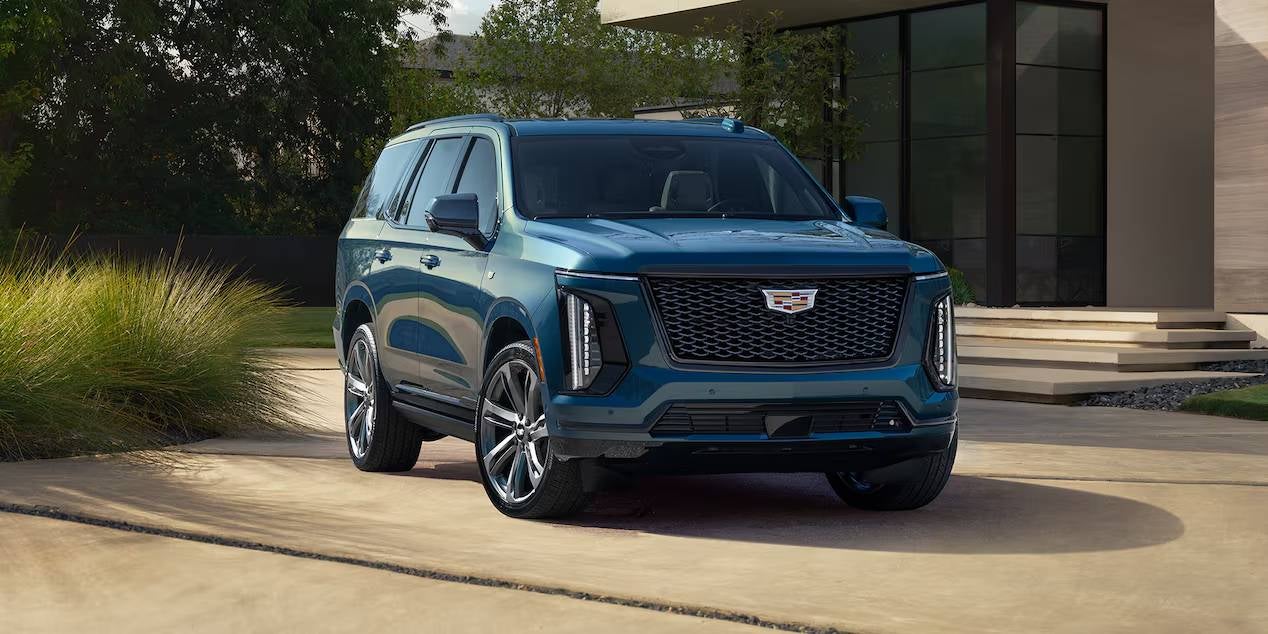
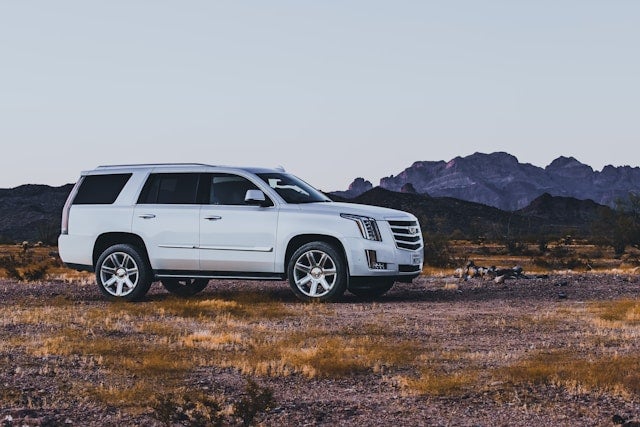
Yes, a Cadillac Escalade may qualify as a tax write-off for your business, largely because its Gross Vehicle Weight Rating (GVWR) typically exceeds 6,000 lbs, placing it in the heavy SUV category under IRS rules. There's no blanket guarantee, though. Eligibility depends on how much you actually use the vehicle for business, when you place it in service, and which trim and configuration you choose. If you're a Gulf Coast business owner weighing this decision, our team at Turan-Foley Cadillac in Gulfport, MS can walk you through Escalade trims while you sort out the tax details with your accountant. You're also welcome to browse new Escalade inventory now to see what's available.

Can a Cadillac Escalade Be a Tax Write-Off? What Business Owners Should Know

The Escalade's classification as a heavy SUV opens the door to Section 179 deductions, but walking through that door requires meeting specific conditions. The vehicle has to be used for business more than half the time, and you need documentation to back that up.

A lot of the confusion around SUV tax write-offs comes down to one wrong assumption: that buying a heavy vehicle means an automatic write-off just because of its weight class. The IRS cares about how the vehicle is used, not just what it weighs. A contractor who drives an Escalade to job sites and client meetings has a much stronger case than someone who buys one mostly for personal errands and occasionally uses it for work.

Understanding GVWR: Why the Escalade May Qualify as a Heavy SUV

GVWR is the maximum loaded weight of a vehicle as set by the manufacturer, and it's the number the IRS looks at, not curb weight. You'll find it printed on the driver's door jamb. Vehicles rated above 6,000 lbs GVWR fall outside the passenger automobile depreciation limits and into heavy SUV territory, where first-year deduction ceilings are considerably higher.

Because GVWR shifts by model year and configuration, don't assume every Escalade carries the same rating. Here's where several 2026 configurations land:


Configuration

GVWR

Above 6,000 lb threshold

2026 Escalade ESV Sport

7,600 lb

Yes

2026 Escalade ESV V‑Series

7,700 lb

Yes

2026 Escalade V‑Series

7,700 lb

Yes

GVWR is only the first test. Whether a purchase actually produces a deduction also depends on how much you use the vehicle for business, when it's placed in service, and your own tax picture, so check the door jamb on the specific vehicle and run the numbers past your CPA.

Confirming Your Escalade's Exact GVWR

The only reliable way to confirm your specific Escalade's GVWR is the vehicle certification label on the driver's side door jamb. That label reflects the exact configuration of the vehicle you're buying, not a general figure for the model line, so verify it there before you or your tax preparer rely on any GVWR number. Our team can also pull spec sheets for specific trims, or you can browse our current Escalade inventory if you're comparing options before you buy.

Section 179 Deduction Rules for Heavy SUVs in 2026

Section 179 lets businesses deduct the cost of qualifying equipment and vehicles in the year they're placed in service, rather than depreciating that cost over several years. Heavy SUVs get treated differently from most other business equipment, though.

The separate SUV rules apply to vehicles rated between 6,001 and 14,000 lbs GVWR, which covers the Escalade in its usual configurations. That's why it comes up so often in conversations about vehicle-over-6,000-lbs tax deductions heading into 2026.

The $32,000 Vehicle-Specific Deduction Cap

Heavy SUVs face a vehicle-specific Section 179 cap of $32,000 for the 2026 tax year. People often get tripped up here, thinking that's the whole story. That's a first-year expensing limit, not a cap on the total deduction you can eventually claim. Any remaining cost above that $32,000 cap doesn't just disappear. It can be handled through bonus depreciation or standard depreciation schedules, which is why pairing Section 179 with bonus depreciation matters so much for vehicles like the Escalade.

Bonus Depreciation and How It Works Alongside Section 179

Bonus depreciation picks up where the Section 179 cap leaves off. Under the One Big Beautiful Bill Act (OBBBA), 100% bonus depreciation was permanently reinstated for qualified property acquired and placed in service after January 19, 2025. Unlike Section 179, bonus depreciation isn't limited by your business's taxable income, and it can actually create a net operating loss in some cases.

In practice, this means a business owner who buys an Escalade can apply the $32,000 Section 179 cap first, then use bonus depreciation to cover a significant portion of the remaining business-use cost in that same tax year. Both deductions only apply to the percentage of the vehicle used for business, so a vehicle used 70% for work only allows deductions on 70% of the eligible cost. If you're weighing purchase timing against these rules, it often helps to get pre-approved for financing before you finalize numbers with your tax preparer, since financing terms can affect when the vehicle is officially placed in service.

Qualifying for the Deduction: Business-Use Requirements

None of these deductions matter if your business-use percentage doesn't clear 50%. The IRS requires that the vehicle be used for business more than half the time, and the vehicle must be placed in service during the tax year you're claiming the deduction for. Miss that window, and you're pushed into the following tax year regardless of when you signed the paperwork.

Consider a contractor based in Gulfport who buys an Escalade primarily to drive to job sites and meet with clients across the Gulf Coast, including trips to Biloxi and Hattiesburg. If that contractor tracks mileage carefully and can show the vehicle was used for business 65% of the time, that 65% becomes the basis for calculating the deduction, not the full purchase price.

Calculating Your Business-Use Percentage

The math starts with accurate mileage data: multiply the vehicle's cost by your business-use percentage to find the basis your deductions apply to. Using our contractor example, an Escalade used 65% for business puts 65% of its cost in play. Section 179 addresses up to $32,000 of that amount, and bonus depreciation can be applied to what's left. Move the percentage and every figure below it moves with it.

Recordkeeping and Mileage Logs You'll Need

Solid recordkeeping isn't optional if you want this deduction to hold up. You'll need purchase or financing documents, your registration and title, and a contemporaneous mileage log that records the date, destination, business purpose, miles driven, and odometer readings for every trip. It's also worth knowing that once you claim Section 179 or bonus depreciation on a vehicle, you're committed to using the actual expense method going forward rather than switching to the standard mileage rate.

Common Misconceptions About Writing Off an Escalade

A few misunderstandings come up again and again with heavy SUV deductions. The biggest one is assuming the $32,000 cap means the full sticker price gets written off. It doesn't. That cap applies to the first-year Section 179 portion, and while 100% bonus depreciation can cover a meaningful chunk of the remaining business-use cost, the full purchase price being deductible in one shot simply isn't how this works for most buyers.

Another common mix-up is confusing GVWR with curb weight. Curb weight tells you how much the vehicle weighs empty. GVWR, the maximum weight rating the manufacturer assigns, is what actually determines heavy SUV eligibility. Skipping mileage logs is another problem area, whether that means putting off tracking trips until tax season (and hoping to reconstruct them from memory) or overstating business use by claiming 100% despite regularly using the vehicle for personal errands and family trips.

Missing the placed-in-service deadline is another frequent misstep, as is overlooking the recapture risk: if business use drops to 50% or less in a later year, or the vehicle is sold prematurely, the IRS may require repayment of part of the deduction already claimed.

Frequently Asked Questions

Does the full purchase price get written off?

Generally, no. The $32,000 heavy SUV cap limits the first-year Section 179 portion, and any remaining eligible cost, based on your business-use percentage, may be addressed through bonus depreciation or standard depreciation. Whether you get close to writing off the full cost depends heavily on your specific business-use percentage and timing.

What if my business use drops below 50% later?

If your business use falls to 50% or less in a subsequent year, you may face recapture, meaning you could have to repay part of the deduction you originally claimed. The exact impact depends on your individual tax situation, so this is worth discussing directly with a tax professional before it becomes an issue.

Can I claim the deduction if I lease instead of buy?

It depends on the lease structure. True or operating leases generally don't qualify for Section 179, since you'd deduct the lease payments themselves instead. Capital or finance leases get treated differently for tax purposes because they're closer to a purchase in structure, so they may qualify. With standard leases, dropping below 50% business use typically just stops future payment deductions rather than triggering recapture.

Talk to a Tax Professional, Then Explore Escalade Availability at Turan-Foley Cadillac

General Information, Not Tax Advice

This article is meant for general informational purposes only and isn't tax, legal, or accounting advice. Every business situation is different, and the rules around Section 179, bonus depreciation, and business-use requirements are detailed enough that guessing can cost you. Before making any purchase or deduction decisions, talk with a licensed tax professional who can look at your specific numbers.

Connect with Turan-Foley Cadillac

Once you've had that conversation, we're here for the vehicle side of things. Turan-Foley Cadillac has served Gulf Coast families and business owners in Gulfport for more than 50 years, and we're seeing more owners in Biloxi and Hattiesburg explore what a heavy SUV like the Escalade could mean for their business. Whether you're deciding between an Escalade ESV Sport and an Escalade ESV V-Series, or you just want to see current GVWR specs in person, contact our team and we'll help you find the right fit for your business and your budget.

Posted in:

Related Posts

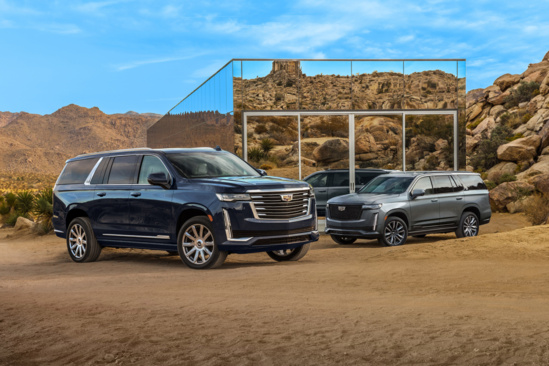
two cadillac escalade suvs

What's New With the 2027 Cadillac Escalade?

The Cadillac Escalade has never been subtle, and that is exactly the point. For drivers who want a full-size luxury SUV with serious presence, three-row comfort, premium technology, and strong V8 performance, the Escalade remains one of Cadillac’s defining models. For 2027, the Escalade does not completely reinvent itself. Instead, Cadillac builds on the major updates from the recent refresh while making select changes to the lineup, features, colors, and available equipment. If you are shopping for a new luxury SUV in Gulfport, Biloxi, Long Beach, Bay St. Louis, or anywhere along the Mississippi Gulf Coast, the 2027 Escalade is worth a close look. You can also browse our current new Cadillac Escalade inventory in Gulfport to see what is available now at Turan-Foley Cadillac. 2027 Cadillac Escalade: More Refinement Than Redesign The biggest thing to know is that the 2027 Cadillac Escalade carries forward the bold design and high-tech cabin that helped define the latest version of Cadillac’s flagship SUV. The dramatic front lighting, commanding grille, premium interior layout, and large digital display all remain central to the Escalade experience. That means shoppers still get the parts of the Escalade that matter most: a spacious three-row cabin, strong V8 power, available long-wheelbase Escalade ESV practicality, and a luxury-focused driving experience that feels equally comfortable around Gulfport or on a longer drive across I-10. Updated 2027 Escalade Lineup One of the more notable changes for 2027 is the trim structure. The Escalade lineup has been adjusted, with the Luxury trim becoming the new entry point. That gives shoppers a highly equipped starting place, rather than a stripped-down version of Cadillac’s flagship SUV. The 2027 Escalade Luxury comes with an impressive list of standard features, including a 6.2L V8 engine, Super Cruise hands-free driver assistance technology with a 3-year OnStar One Plan, Google built-in compatibility, a 55-inch Horizon Display, a 21-speaker AKG Studio audio system, heated and ventilated front seats, a dual-pane Power SkyGlass roof, and an illuminated Cadillac crest. For shoppers who want more upscale materials and features, Platinum Luxury and Platinum Sport models continue to raise the level of comfort and design. These trims add details like semi-aniline leather seating, enhanced audio, elevated interior finishes, and other premium features that make the Escalade feel even more executive. New Technology and Convenience Features The 2027 Cadillac Escalade also brings select feature updates that make daily use even easier. A digital key feature is expected as part of a future software update, giving drivers another convenient way to access and use the vehicle. Trailer tire pressure monitoring support is also new, which is helpful for Escalade owners who tow boats, trailers, or weekend gear around the Gulf Coast. The Escalade’s technology suite remains one of its strongest selling points. The 55-inch Horizon Display spans the front row and gives the cabin a clean, modern command-center feel. Super Cruise is also standard on the 2027 Escalade with the included 3-year OnStar One Plan, giving drivers access to hands-free driver assistance technology on compatible roads. For families, road trips, and passengers who expect a premium experience, available rear-seat entertainment screens, Google built-in, 5G Wi-Fi hotspot capability, and wireless phone charging all help make the Escalade feel ready for long drives and busy everyday schedules. Luxury Interior Options Continue to Stand Out Inside, the 2027 Escalade continues to focus on space, craftsmanship, and comfort. Depending on configuration, the Escalade can seat up to eight passengers, while the Escalade ESV offers even more room for passengers and cargo. Cadillac says the ESV provides 21.7 cubic feet more cargo room and interior space than the standard Escalade, making it the stronger fit for drivers who regularly travel with family, luggage, golf clubs, beach gear, or business equipment. The available Executive Second Row package is one of the most upscale options in the lineup. It can include stowable tray tables, two wireless phone charging pads, rear heated, ventilated, and massaging seats, a rear command center, and an AKG Studio Reference 42-speaker surround audio system. For shoppers who plan to use the Escalade for client transportation, family travel, or premium second-row comfort, this package is one of the features that helps separate the Escalade from ordinary three-row SUVs. Performance: Standard V8 Power and Escalade-V Muscle The 2027 Cadillac Escalade continues with a standard 6.2L V8 engine rated at 420 horsepower and 460 lb-ft of torque. This engine gives the Escalade the confident feel shoppers expect from a full-size luxury SUV, whether you are merging onto Highway 49, heading toward Biloxi, or loading up for a weekend road trip. When properly equipped, the standard Escalade can tow up to 8,100 pounds, while the longer Escalade ESV can tow up to 8,000 pounds. That makes the Escalade a strong option for drivers who want luxury SUV comfort without giving up practical capability. For shoppers who want something even more aggressive, the Escalade-V remains the performance flagship. Its supercharged 6.2L V8 produces 682 horsepower and 653 lb-ft of torque, giving Cadillac’s largest SUV a level of performance that feels far beyond typical full-size SUV expectations. Exterior Updates and Appearance Options The 2027 Escalade keeps the commanding exterior style that has made it such a recognizable luxury SUV. Slimline LED lighting, signature vertical lighting, an available illuminated grille surround, and available 24-inch wheels help the Escalade make a strong first impression. For 2027, Cadillac also adds Sandstone as an available exterior color. Appearance packages continue to give shoppers ways to personalize the look of the Escalade, including darkened exterior accents on select trims. If you want a more athletic look, the Sport and V-Series models will likely be the best place to start. If you prefer a more traditional luxury presentation, Luxury and Platinum Luxury trims may be a better match. Safety and Driver Assistance Features The 2027 Escalade also continues to offer a deep list of safety and driver assistance features. Standard and available technologies include Intersection Automatic Emergency Braking, Lane Change Alert with Side Blind Zone Alert, Forward Collision Alert, HD Surround Vision, Rear Pedestrian Alert, and more. These features are especially valuable in a large SUV because they help support awareness in parking lots, busy city traffic, school pickup lines, and highway driving. The Escalade is still a large, powerful luxury SUV, but its technology helps make it feel more manageable and confident from the driver’s seat. Should You Wait for the 2027 Cadillac Escalade? If you want the newest version of Cadillac’s flagship gas-powered SUV, the 2027 Escalade is the one to watch. The updates are not a total redesign, but they make the lineup more focused while preserving the Escalade’s strongest traits: bold styling, a luxury cabin, advanced technology, V8 capability, and serious road presence. If you are comparing the 2027 Escalade to current models, it may come down to timing, availability, and the exact features you want. A current Escalade may still be a great choice if you find the right trim, color, and offer. However, shoppers who want the latest lineup changes, new tech additions, and newest available colors may prefer to ask about 2027 Escalade availability. You can start by exploring our new Cadillac SUVs in Gulfport, checking our new Cadillac specials and lease offers, or getting started with our Cadillac finance department. Shop the Cadillac Escalade at Turan-Foley Cadillac At Turan-Foley Cadillac, we help Gulf Coast drivers compare Cadillac SUVs with confidence. Whether you are interested in a new Escalade, Escalade ESV, Escalade-V, or another luxury Cadillac model, our team can help you review trims, features, finance options, and current availability. Visit Turan-Foley Cadillac in Gulfport, MS, to experience the Escalade in person, or start online by browsing our new Cadillac Escalade inventory. You can also value your current vehicle with our KBB Instant Cash Offer tool or schedule a visit through our test drive page.

escalade in driveway of house with garage

Can a Cadillac Escalade Fit in a Garage?

If you've ever eyed an Escalade in our lot and then mentally measured your garage door, you're asking the right question. Whether a Cadillac Escalade fits in a garage depends less on the vehicle and more on the garage itself, especially if you live in an older home along the Gulf Coast. Before you decide, explore our Escalade inventory so you know exactly which body style you're measuring for. Can a Cadillac Escalade Fit in a Garage? It Depends on the Garage There's no single answer here. The standard Escalade and the longer Escalade ESV differ in length, and garages vary just as much, particularly around Gulfport, Biloxi, and Hattiesburg, where a good number of homes were built decades before today's larger SUVs became common. A newer three-car garage with a 9-foot single door or a 16-foot double door usually has plenty of room. An older single-car garage built with a compact sedan in mind may not. Your garage's dimensions decide the outcome here, not the vehicle's, so we always tell shoppers to measure first. 2026 Cadillac Escalade Dimensions Explained The 2026 Escalade measures 211.9 inches long, with a 121-inch wheelbase. Width comes in at 93.7 inches with the mirrors extended, dropping to 81.08 inches when folded in. Height sits at 76.7 inches. The Escalade ESV stretches the wheelbase to 134 inches and the overall length to 226.9 inches, 15 inches longer than the standard model. Width stays identical at 93.7 inches extended and 81.08 inches folded, and height comes in just slightly lower at 76.4 inches. That extra length is the main thing to plan around with the ESV. Specification Escalade Escalade ESV Length 211.9" 226.9" Wheelbase 121" 134" Width (mirrors extended) 93.7" 93.7" Width (mirrors folded) 81.08" 81.08" Height 76.7" 76.4" Why Height Isn't Usually the Problem Standard residential garage door height has been 7 feet, or 84 inches, for decades, and that's the U.S. norm most homes were built around. Both the Escalade and the Escalade ESV clear that opening with room left over, since neither model exceeds 77 inches in height. Eight-foot doors are also widely available and give extra clearance if you're storing roof-rack gear or a taller vehicle. The real height problem usually comes from what's mounted just inside the door: overhead storage racks or ceiling-mounted openers that eat into clearance you assumed you had. The Real Garage-Fit Challenges Height rarely matters. Length, width, and interior clutter are the things that actually cause trouble. Length and Depth Constraints At 211.9 inches, the standard Escalade already asks a lot of a shallow garage, and the Escalade ESV's 226.9 inches asks even more. General garage-industry planning guidance suggests minimum depth should equal door height plus 18 inches, though that's a broad construction standard, not a Cadillac-specific figure. In practice, you'll also want a buffer of roughly 6 to 12 inches front and back so you're not squeezing past a wall or a garage door track every time you park. Mirror Width and Side Clearance Both Escalade models measure 93.7 inches wide with mirrors extended, narrowing to 81.08 inches folded. That folded figure matters most for tight single-car doors, since a 9-foot opening is only 108 inches wide and a 10-foot opening gives noticeably more breathing room. Folding the mirrors before pulling in can be the difference between a comfortable fit and a scraped side mirror. Steps, Shelves, and Door Opener Hardware A garage can have generous length and width on paper and still feel tight once you factor in interior steps or wall-mounted shelving. These fixtures often go unnoticed until you're actually trying to maneuver a full-size SUV around them. If your garage doubles as storage space, it's worth walking through with a tape measure before assuming the Escalade will slide in easily. How to Measure Your Garage Before Buying A spec sheet number doesn't tell you anything about your specific garage. A methodical walk-through with a tape measure takes ten minutes and saves a lot of frustration later. If you run into questions while measuring, feel free to contact our team with sizing questions. Measuring Depth, Door Width, and Interior Clearance Work through these steps in order: Measure garage depth from the inside of the closed door to the back wall. Measure the door opening width at its narrowest point, not just the frame. Measure usable interior width between any shelving, poles, or wall fixtures. Measure clearance height from the floor to the lowest overhead obstruction. Use a tape measure and mark the parked position with chalk so you can visualize the fit before buying. Check door swing clearance if you plan to open car doors fully inside the garage. Checking Ceiling and Opener Clearance Panel size matters for headroom, too. A standard 7-foot door typically uses four 21-inch panels, while an 8-foot door uses three 18-inch and two 21-inch panels, and taller doors need more vertical space above the opening for the track hardware. Always check the actual opening height rather than assuming based on panel count, since framing and track systems affect real clearance. An 8-foot door can't simply be dropped into a 7-foot opening without reframing the structure. Escalade vs. Escalade ESV: Which Fits Your Garage Best If your garage depth is on the shorter side, particularly in an older Gulfport or Biloxi home, the standard Escalade's 211.9-inch length gives you more margin than the ESV's 226.9 inches. Width and height are nearly identical between the two, so the deciding factor almost always comes down to how much depth and door clearance your specific garage offers. Newer construction in Hattiesburg and the surrounding area tends to have deeper bays and wider double doors, which makes the ESV's extra length far less of an issue. Visit Turan-Foley Cadillac to Compare Escalade Sizes in Person See Both Body Styles on Our Lot Numbers on a page only tell part of the story. On our lot, you can walk around the standard Escalade and the ESV side by side, get a real sense of the 15-inch length difference, and even bring your own tape measure to compare against notes you took at home. As a family-owned dealership serving the Mississippi Gulf Coast for more than 50 years, we've talked through plenty of garage-fit questions with local buyers, and we're glad to do the same with you. Ready to Move Forward? When you're ready, schedule a visit to compare Escalade sizes in person, or get pre-approved so financing is one less thing to sort out once you've confirmed the fit. Frequently Asked Questions About Escalade Garage Fit Can a Cadillac Escalade fit in a garage with a standard 7-foot door? Both Escalade models measure under 77 inches tall, so a 7-foot door clears them with room to spare. What actually decides the fit is whether your garage has enough depth and width, and that varies home to home. Does the Escalade ESV need a bigger garage than the standard Escalade? The ESV is 15 inches longer, at 226.9 inches versus 211.9 inches, so it needs more depth. Width is identical across both models, and height differs by only 0.3 inch (76.7 inches for the Escalade versus 76.4 inches for the Escalade ESV). Will folding the mirrors help the Escalade fit in a narrow garage? Yes. Folded mirrors bring the width down from 93.7 inches to 81.08 inches, which can make a meaningful difference in a single-car garage. Are older homes in Gulfport and Biloxi more likely to have fit issues? Often, yes. Older construction in these areas may have narrower door openings or lower headroom than newer builds, so measuring beforehand is especially important if your home predates modern SUV sizing. What's the best way to confirm my garage will work before buying? Measure depth, door width, interior clearance, and ceiling height yourself, then compare those figures against the Escalade or Escalade ESV specs, or stop by Turan-Foley Cadillac and we'll walk through it with you.

2025 cadillac escalade

Cadillac Escalade Oil Type | All Model Years

When you’re protecting a flagship like the Escalade, the right oil isn’t a guess—it’s an engineering requirement. Below is a clear, year-by-year breakdown from the newest models back to the first-gen trucks. We group years that share the same specification and call out exceptions (like the Escalade-V and the 2021–2024 L87 recall update). Where it matters, we note the GM “dexos” certification your oil must carry. If you’d like us to confirm your VIN-specific spec or perform an oil service with GM-approved oil and filters, the Turan-Foley Cadillac team is ready to help. 2026–2021 Escalade (5th Gen, 6.2L Gas L87) For standard gasoline Escalade models with the 6.2L L87 V8, the owner’s manual specifies full-synthetic SAE 0W-20 that meets GM dexos1 (latest generation). Always verify on your oil fill cap and in the manual; that’s GM’s source of truth. Important exception for 2021–2024 L87 engines: GM recall N252494001 directs dealers to inspect affected engines. If your engine passes inspection, GM updates the requirement to dexosR 0W-40 (and replaces the oil cap and adds an owner-manual insert). If the engine fails, it’s replaced and remains on 0W-20 dexos1. This update is documented in GM’s recall bulletin and reported by major outlets. Follow whatever your updated cap and paperwork state. Bottom line: • 2025–2026 L87 (and any 2021–2024 not updated by the recall): dexos1 full-synthetic 0W-20. • 2021–2024 L87 vehicles updated under the recall: dexosR full-synthetic 0W-40. 2026–2023 Escalade-V (6.2L Supercharged LT4) The Escalade-V uses GM’s high-output supercharged 6.2L. It requires dexosR 0W-40—this is a different oil family than standard Escalade. GM’s manual calls out dexosR 0W-40 (Mobil 1 ESP Formula dexosR 0W-40). Do not substitute 0W-20 here. 2026–2021 Escalade (3.0L Duramax Diesel LM2/LZ0) Diesel Escalades need engine oil that meets GM dexosD in SAE 0W-20. This is explicitly stated in GM’s Duramax 3.0L Diesel Owner Manual Supplement: “Use engine oils that meet the dexosD specification… Use SAE 0W-20 viscosity grade.” 2020–2015 Escalade (4th Gen, 6.2L L86) These K2-generation Escalades specify full-synthetic SAE 0W-20 that meets dexos1. That requirement is spelled out in the owner’s manual and applies across this generation. 2014–2007 Escalade & Escalade Hybrid (3rd Gen) Third-gen gas Escalades are a 5W-30 era. The 2014 owner’s manual specifies SAE 5W-30 and references the dexos1 standard for the oil. In very cold climates, 0W-30 may be used. Earlier third-gen manuals specify 5W-30 meeting GM’s prior standards (e.g., GM6094M for most gas engines; the Hybrid’s 6.0L called for oils meeting GM4718M). If your 2007–2010 truck still shows the earlier GM spec in the manual, follow it or use a modern dexos1 5W-30 that supersedes those legacy specifications. 2006–2002 Escalade (2nd Gen) The second-gen trucks call for SAE 5W-30. In extreme cold (below −20°F/−29°C), SAE 0W-30 may be used for easier starts. GM’s manuals from this period also reference the GM6094M oil standard; a current dexos1-licensed 5W-30 satisfies and exceeds that legacy requirement. 2000–1999 Escalade (1st Gen) First-generation Escalades also specify SAE 5W-30 (with 0W-30 permitted in extreme cold). As with the early 2000s trucks, GM6094M was the contemporary spec; a modern dexos1-licensed 5W-30 is an appropriate present-day equivalent. Pro Tips From Our Shop • Check the cap: If your oil fill cap says 0W-40 (post-recall L87) or 0W-20 (standard L87), follow the cap and updated paperwork. The cap is updated alongside the recall work for 2021–2024 L87 engines that remain in service. • Match the dexos spec: Gasoline Escalades use dexos1 (0W-20 or 5W-30 depending on year), the Escalade-V uses dexosR 0W-40, and the Duramax uses dexosD 0W-20. Using oil without the correct dexos approval can jeopardize protection and warranty coverage. • Confirm by VIN: Some 2021–2024 L87 vehicles changed viscosity requirements under the recall. We can check your VIN, the cap, and update records in minutes. Conclusion Choosing the correct oil for your Escalade comes down to engine, model year, and the proper GM dexos approval. In short: late-model gas L87s are 0W-20 dexos1 unless updated by the 2021–2024 recall to 0W-40 dexosR; the Escalade-V is always dexosR 0W-40; Duramax models are dexosD 0W-20; earlier generations are 5W-30 (or 0W-30 in extreme cold) per their manuals. If you want a quick, no-nonsense answer for your exact VIN and driving conditions, Turan-Foley Cadillac’s service advisors will verify the spec and service your Escalade with GM-approved oil and an OEM filter.