


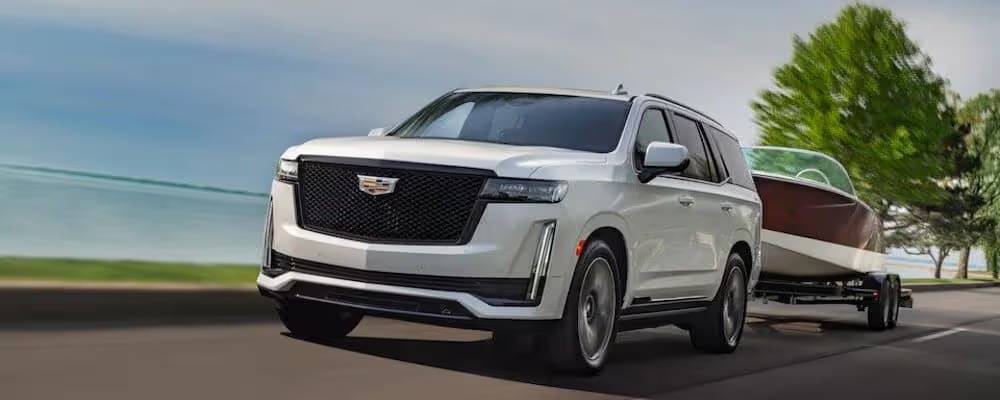
Most luxury car brands build their identity through modern marketing. Cadillac took a different path. The distinctive crest adorning every Cadillac vehicle traces back to an 18th-century French explorer who never saw an automobile. This remarkable connection between nobility and automotive excellence has shaped one of America’s most recognizable luxury brands for over a century.
The Noble Origins: How a French Explorer Became an Automotive Icon
When Henry Leland founded the Cadillac company in 1902, he faced a crucial branding decision. Rather than create something entirely new, he looked to Detroit’s founding father for inspiration. This choice would define the Cadillac car brand for generations.
Antoine de la Mothe Cadillac and His Coat of Arms
Antoine de la Mothe Cadillac arrived in North America in 1683, driven by ambition and a pioneering spirit. The French explorer established Fort Pontchartrain du Détroit in 1701, laying the foundation for the city where Cadillac vehicles would later be born. His personal coat of arms, a symbol of his noble lineage, featured intricate heraldic elements that would become the foundation of automotive luxury when Henry Leland adopted them in 1905.
The coat of arms wasn’t just decorative. It represented status, achievements, and family heritage. When the automotive company adopted this historical emblem, they inherited centuries of symbolic meaning. The Cadillac coat of arms became more than a logo (it transformed into a promise of quality, craftsmanship, and prestige that connected American innovation with European nobility).
From Detroit Founder to Luxury Symbol
The connection between a French explorer and an American automotive icon might seem unusual at first. But the parallel between Cadillac’s pioneering spirit and the brand’s commitment to innovation made perfect sense. Both represented leadership, exploration, and the courage to chart new territory.
Henry Leland understood that luxury required more than fine materials and precise engineering. It needed a story, a heritage that customers could connect with emotionally. By linking the first Cadillac automobiles to Detroit’s founding father, the company established instant credibility and gravitas from the very beginning.
Decoding the Cadillac Emblem: The Meaning Behind Every Element
The meaning of Cadillac emblem extends far beyond aesthetic appeal. Every component carries specific symbolism carefully preserved throughout the Cadillac logo evolution. Understanding what the Cadillac emblem means requires examining each heraldic element individually.
The Crown, Shield, and Quartered Colors
The pearl-studded coronet sitting atop the shield represents France’s six ancient courts, with its pearls indicating royal descendants of Toulouse. This crown signals that Cadillac doesn’t just build cars; the brand creates vehicles worthy of nobility. The shield itself symbolizes protection and strength, reassuring owners that their investment stands guard against the ordinary.
The quartered colors within the shield tell their own story. Red and silver represent bravery and purity, while black and yellow symbolize determination and generosity. Each section contributes to the whole, much like how engineering, design, and craftsmanship combine to create a complete Cadillac experience. The rich colors convey sophistication while maintaining visual interest across different applications and scales.
The Mysterious Merlettes and the Laurel Wreath
Look closely at the Cadillac emblem, and you’ll notice small birds called merlettes. These mythical creatures appear without beaks or feet, eternally in flight, symbolizing constant striving for excellence. Traditionally appearing in trios to reference the Holy Trinity, these heraldic birds add depth to the Cadillac emblem meaning, suggesting that luxury must be earned through dedication and perseverance.
The laurel wreath encircling the crest carries universal symbolism of victory and achievement. Its connection to Cadillac’s history runs deeper than aesthetics. When the brand won the prestigious Dewar Trophy in 1908 for pioneering parts standardization, the laurel wreath took on added significance as a symbol of the company’s revolutionary technical achievements.
The Early Years: Birth of the Cadillac Crest (1902-1930s)
The original Cadillac emblem emerged in 1902 as simple cursive script before evolving into the first circular coat-of-arms badge in 1905. Those early versions featured more elaborate detail than today’s streamlined design, closely mirroring Antoine de la Mothe Cadillac’s actual coat of arms, complete with intricate flourishes and complex color patterns.
By 1908, the crest had gained additional elements including slogans, a tulip-bulb wreath, and a nine-point crown that later became seven. During these formative decades, Cadillac established itself as a pioneer in precision manufacturing. The brand’s commitment to interchangeable parts revolutionized automotive production. This technical innovation mirrored the crest’s promise of quality and craftsmanship.
The crest evolved subtly during this period as Cadillac refined its brand identity. Changes remained conservative, respecting the historical significance while adapting to practical manufacturing considerations. These early adjustments set a pattern that would continue throughout the Cadillac history timeline: evolution without abandonment of core identity.
The Golden Era: Art Deco Glamour and Post-War Prestige (1930s-1960s)
The decades spanning the 1930s through 1960s represent Cadillac’s most glamorous period. Between 1932 and 1942, Art Deco influences swept through American design, and the Cadillac emblems through the years reflected this aesthetic revolution with wings framing the crest. Sharp lines, geometric patterns, and streamlined forms characterized both the vehicles and their badges.
The wartime years of 1943 to 1945 brought simplicity to the design, followed by the addition of a victory flag. Post-war prosperity created unprecedented demand for luxury vehicles. From 1946 onward, a bold V appeared in the crest, celebrating Cadillac’s powerful V8 engines. Later designs featured stylized V-wings that complemented the era’s dramatic vehicle styling.
This era saw Cadillac introduce iconic models that became synonymous with luxury. Tailfins reached skyward, chrome sparkled in abundance, and the crest evolved to complement these bold designs. Between 1957 and 1960, the emblem took on a low, broad shape that perfectly mirrored the jet-age tailfins and futuristic styling of the period. The brand’s vehicles weren’t just transportation; they were rolling statements of style and sophistication.
Mid-Century Refinements: Streamlining a Legend (1960s-1999)
As tastes changed through the latter half of the 20th century, Cadillac adapted its visual identity. The Cadillac logos through the years became progressively simpler and more refined. In 1970, the wings disappeared entirely. Then from 1973 to 1994, the laurels returned, demonstrating the brand’s commitment to its heritage symbols.
Remarkably, the 1963 crest design endured for 36 years with minimal changes, a testament to its iconic status and timeless appeal. These modifications respected tradition while acknowledging contemporary preferences. The core elements remained constant: crown, shield, quartered colors, and heraldic details. But their execution became cleaner and more sophisticated.
The period also saw increased competition from European luxury brands. Cadillac responded by emphasizing its unique American heritage and the historical significance of its emblem. Between 1995 and 1999, a circular badge encasement provided a fresh presentation while the crest became a differentiator, a symbol that connected customers to something larger than automotive engineering alone.
The Modern Crest: Bold Simplicity for a New Century (2000-Present)
The turn of the millennium brought dramatic changes to automotive design and consumer expectations. The new Cadillac emblem needed to honor tradition while embracing contemporary aesthetics.
The 2000 Art and Science Transformation
Cadillac’s Art and Science design philosophy revolutionized the brand’s approach to luxury. Sharp angles replaced flowing curves. Bold statements superseded subtle elegance. The Cadillac logo’s new direction reflected this transformation with a more angular, contemporary interpretation of the traditional crest.
In 1999 and 2000, nearly 30 redesigns led to this dramatic shift. The merlettes and coronet were removed for the first time in the brand’s history, creating crisp angles and streamlined forms. This wasn’t abandonment of heritage but rather its reinterpretation for a new generation. The fundamental shield and symbolic colors remained, but their execution became decidedly modern.
The Art and Science philosophy extended beyond the emblem to every aspect of vehicle design. By 2014, the crest received cleaner lines and enlarged proportions, creating cohesion between badge and bodywork. The transformation attracted younger luxury buyers while retaining traditional Cadillac enthusiasts.
Today’s Striking Monochromatic Emblem
The current Cadillac emblem represents the brand’s most dramatic departure from tradition. Introduced in 2021, the monochromatic design eliminates the traditional quartered colors and laurel wreath in favor of sleek, sophisticated simplicity. This bold choice aligns with the brand’s electric future, appearing on groundbreaking vehicles like the LYRIQ.
Despite removing color, the emblem loses none of its recognition or symbolic power. The shield shape remains distinctive. The crown still conveys aspiration and achievement. What changed is execution rather than essence. This approach appeals to modern luxury consumers who value clean design and timeless sophistication while supporting Cadillac’s expanding electric vehicle lineup.
Evolution at a Glance: The Cadillac Crest Through Time
| Era | Main Visual Features | Key Symbolic Elements |
| 1902-1930s | Circular coat of arms, tulip wreath, ornate crown | Noble heritage established, Dewar Trophy laurels added |
| 1932-1945 | Art Deco wings, streamlined wartime design | Victory and progress through innovation |
| 1946-1972 | Bold V for V8 engines, stylized V-wings | Power and performance celebrated |
| 1973-1999 | Cleaner lines, laurels return, circular encasement | Classic stability meets modern refinement |
| 2000-2020 | Angular Art and Science design, merlettes removed | Contemporary luxury redefined |
| 2021-Present | Monochrome, wreath removed | Electric future, minimalist sophistication |
Experience the Legacy at Turan-Foley Cadillac
Understanding the Cadillac logo history enriches the ownership experience, but nothing compares to seeing that legendary crest adorning a vehicle you can actually drive. At Turan-Foley Cadillac in Gulfport, Mississippi, we bring the legacy of excellence represented by that emblem to life daily.
Our family-owned dealership has served the Mississippi Gulf Coast for over 50 years, embodying the same commitment to quality and craftsmanship that the crest symbolizes. Every new Cadillac sedan, SUV, and electric vehicle in our showroom carries that distinctive emblem, connecting today’s cutting-edge technology with centuries of heritage. From the innovative LYRIQ electric vehicle to the upcoming Optiq and Vistiq models, each represents the next chapter in this storied legacy.
Visit us at 11123 Hwy 49 N, Gulfport, MS 39503, or call 228-284-2613 to discover how Cadillac continues honoring its noble heritage while embracing an exciting electric future. The crest on the grille isn’t just decoration. It’s an invitation to experience luxury refined through generations of innovation and excellence.
Connect with us

